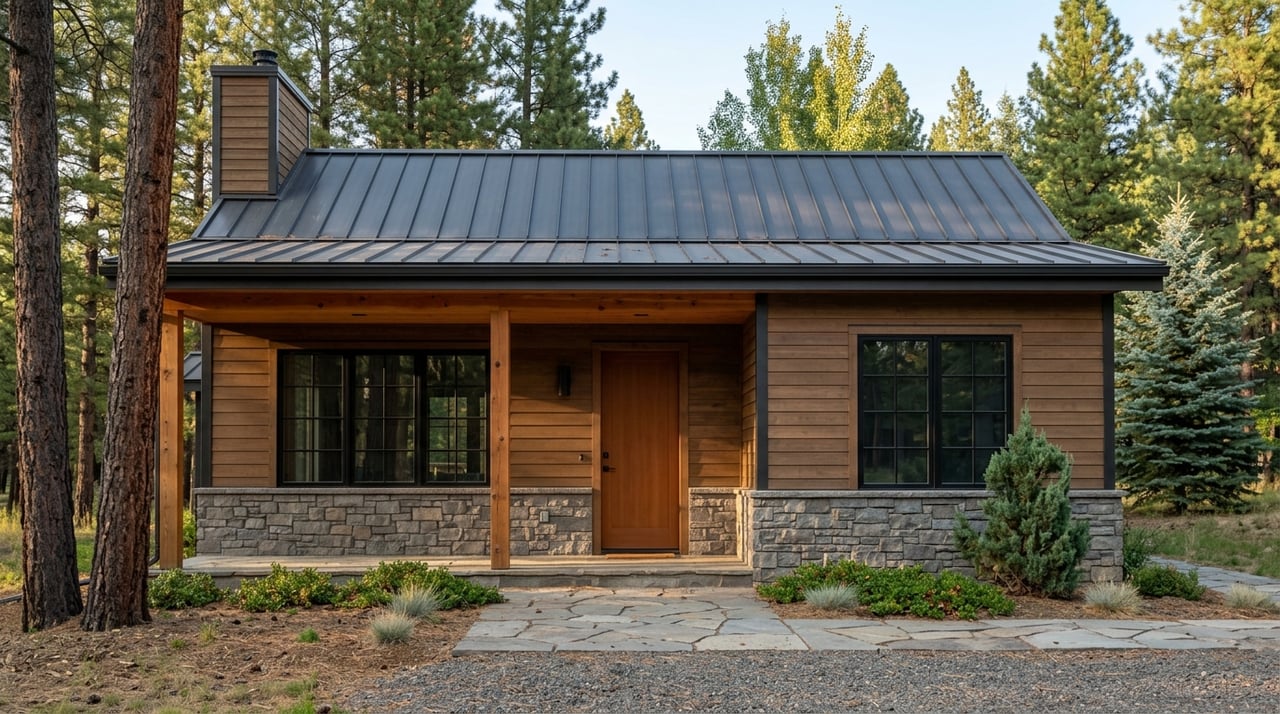
Cabins And Second Homes In Jefferson Colorado
Dreaming about a cabin escape in Jefferson, Colorado? You are not alone. A second home here can offer big skies, quiet surroundings, and a true mountain-country feel, but it also comes with practical questions that matter just as much as the view. If you are thinking about buying in Jefferson, this guide will help you understand what makes this market different and what to verify before you move forward. Let’s dive in.
Jefferson is an unincorporated community in Park County sitting at about 9,499 feet, just over Kenosha Pass from Grant along US 285. Park County describes the area as being surrounded by large cattle ranches and sparsely populated subdivisions, with a small service base that includes a gas station, post office, sporting goods store, real estate office, and general store and restaurant.
That matters because Jefferson does not behave like a typical suburban second-home market. It is better understood as a high-elevation, rural retreat area where access, utilities, and property systems often shape your ownership experience as much as the home itself.
Park County also reports that more of its land lies above 9,000 feet than any other county in Colorado. With about 51% federal land, 8% state land, and 41% private land, the area has a unique mix of open space, public land patterns, and rural development that can affect nearby use, access, and services.
If you are shopping for cabins or second homes in Jefferson, you will mostly be looking at detached houses. Park County’s 2023 housing inventory estimated that 92.2% of occupied units countywide were single-family homes.
That same report estimated 6,577 vacant or second homes and 1,346 short-term rentals out of 14,713 total homes in the county. In other words, part-time ownership and seasonal use are a real part of the local housing mix.
Park County’s 2025 master plan adds more context. It says 9.6% of survey respondents owned a second home in the county, and it notes that seasonal homes can leave some areas quieter during off-season months when many properties sit vacant.
Some buyers want a cabin for personal use, while others also hope for rental income. In Jefferson, that question deserves careful research early in the process.
The county’s AirDNA-based master plan table listed Jefferson with 101 short-term rentals, a 51% occupancy rate, an average nightly rate of $269, and $2.6 million in annual area revenue. It also showed that 100% of those rentals were whole-house rentals rather than room-share setups.
Those numbers show that short-term rentals are part of the Jefferson market, but they do not mean every property will work well as a rental. Layout, access, septic capacity, parking, snow removal, and licensing rules all affect whether a specific cabin is a realistic fit for that use.
A cabin can look perfect online and still be wrong for your needs if access is difficult. In Jefferson, this is one of the first things you should evaluate.
Park County says four-wheel or all-wheel drive vehicles are recommended in all seasons. The county also notes that snow is possible in every month, and winter can begin in late September and last until May.
Nearby Park County climate data shows annual snowfall of roughly 59 to 84 inches in representative communities. That does not mean every road will be equally difficult, but it does mean winter planning should be part of your buying decision from day one.
Not every road is maintained the same way. Park County states that the Road and Bridge Department maintains only roads on the county road system, not private roads or subdivision roads.
In remote areas, county roads may be graded only once a year, if at all. The county also says snow removal on lower-priority roads is considered a courtesy rather than a required service.
If you plan to use a second home during winter, this detail matters. You will want to know who maintains the road, how often it is plowed, and whether year-round access matches how often you plan to visit.
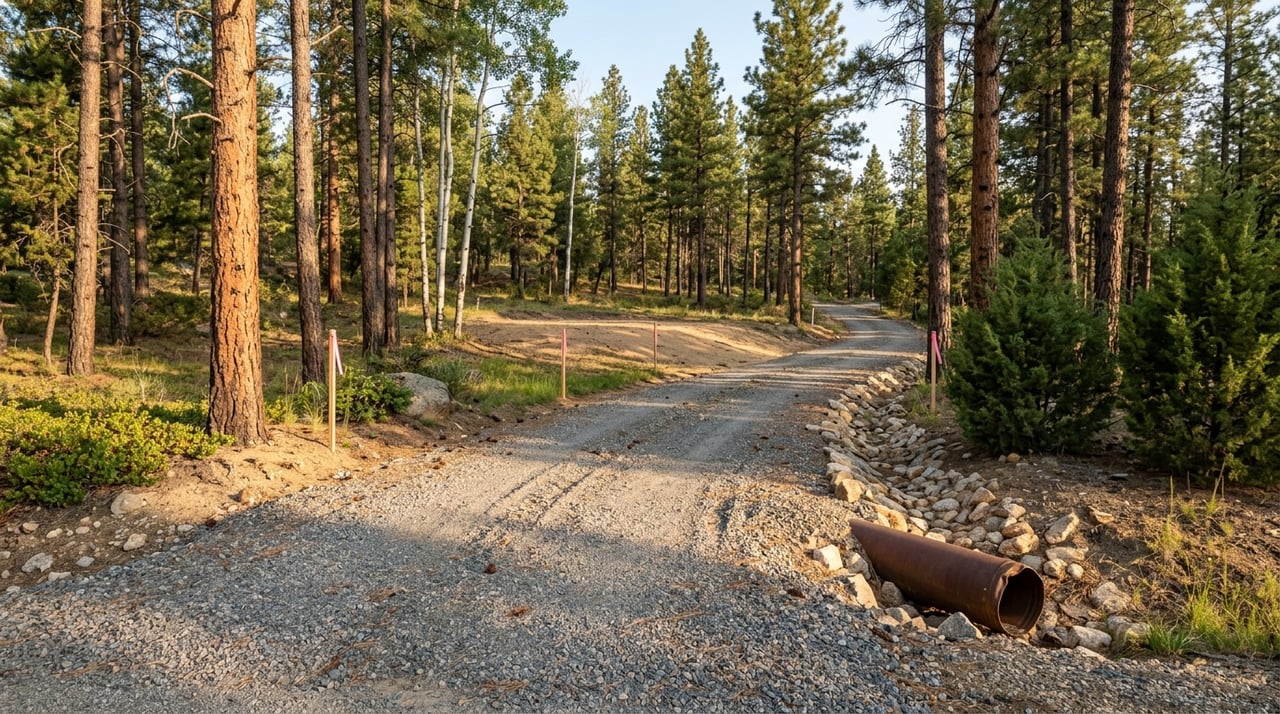
The road to the property is only part of the picture. Park County requires a driveway permit before a driveway is constructed, and property owners are responsible for building and maintaining their own driveways and parking areas.
For a second-home buyer, that means you should think beyond the listing photos. A steep, long, or shaded driveway can create very different winter conditions than the main road serving the area.
Many mountain buyers are used to city utilities, but cabins and second homes in Jefferson often require a different mindset. Water and wastewater systems should be reviewed early, especially if you are considering older homes, vacant land, or future improvements.
Park County says a septic permit must be obtained before applying for a building permit, and a well permit must be obtained before drilling a water well. The county also advises owners to have well water tested by a certified laboratory before household use.
If a property already has these systems in place, you still want to understand their age, condition, and maintenance history. Rural ownership is often easier when you know exactly what you are taking on before closing.
A private well is not a one-time box to check. The Colorado Department of Public Health and Environment says private-well owners are responsible for the safety of their water.
Septic is similar. It is part of ongoing ownership, maintenance, and planning, especially if the home will be used seasonally or potentially as a short-term rental.
If you are buying a cabin in Jefferson, wildfire readiness should be part of your thinking from the start. Park County advises prospective residents to consider the possibility of catastrophic wildfire and to create defensible space around homes and other structures.
Colorado State Forest Service guidance breaks defensible space into three zones: 0 to 5 feet, 5 to 30 feet, and 30 to 100 feet from the home. That framework can help you understand what upkeep and mitigation may be needed around a cabin or second home.
The county’s building checklist also specifically names the Jefferson/Como Fire Protection District as a district that may require fire-mitigation paperwork or impact fees. The district states that it provides fire suppression and EMS services 24/7 and lists a $250 mitigation impact fee for new home construction, new additions, new garages, or new deck foundations.
A mountain retreat can feel wonderfully quiet, but it is wise to balance that appeal with practical planning. Park County’s 2025 master plan says there are no hospitals or full-time medical providers in the county.
The same plan says emergency response can be complicated by limited infrastructure, long travel distances, and severe weather. For second-home owners, that makes year-round access, emergency readiness, and basic property planning especially important.
Some buyers want a second home that can also work for extended stays or remote work. Countywide, Park County’s 2025 master plan reported that 89.3% of households had broadband internet and that 20% of workers worked from home in 2022.
That said, countywide data does not tell you what service is available at one specific parcel. If internet matters to you, verify actual service options and reliability before you commit.
If you are buying with rental use in mind, you need to look at more than market demand. In Colorado, a rental of fewer than 30 days is defined as a short-term rental, and counties may regulate them.
Park County says all short-term rentals must be licensed. The county’s current checklist asks for a state sales tax license with the property address, septic documents, floor plans, a parking plan, a trash-removal plan, a snow-removal plan, and a photo of the address post.
The county also says parking on county roads is not allowed, and renters cannot be asked to pack garbage out. If you are considering an older cabin, Park County further notes that a safety inspection is required if the certificate of occupancy is more than five years old or if a renewal has three or more complaints and or emergency response calls.
A cabin may seem like an easy rental on paper, but rural properties often come with practical limits. Septic, parking, winter access, and the ability to manage guests safely all shape whether a property fits your goals.
That is one reason experienced local guidance matters. In mountain markets, a smart purchase is not just about price or views. It is about whether the property truly supports the way you plan to use it.
Before you buy a cabin or second home in Jefferson, focus on the details that affect daily use and long-term ownership.
Jefferson can be a rewarding place to own a second home, but it rewards buyers who ask practical questions early. The right cabin is not always the one with the flashiest photos. It is the one whose access, systems, upkeep, and rules fit your lifestyle and budget.
That is where practical mountain-property knowledge can make a real difference. With decades of foothill and mountain real estate experience, a construction-aware background, and a low-pressure approach, David Petersmith can help you look beyond surface appeal and evaluate what a Jefferson property really offers.
Stay up to date on the latest real estate trends.
Work with Choice Property Brokers LTD for expert guidance in the Colorado real estate market. Whether you're buying your first home, upgrading, or selling your property, our team provides local insight, strategic pricing, and personalized service to help you achieve the best results.
43 Mt Evans Blvd Pine, CO 80470