Buying Land In Shawnee Colorado: Key Considerations
Buying mountain land can feel simple at first. You see acreage, views, and possibility, and it is easy to picture the future before you know what the property can actually support. In Shawnee, that gap between what looks promising and what is truly buildable can be a big one. This guide walks you through the key issues to check before you buy so you can move forward with more confidence. Let’s dive in.
Shawnee is an unincorporated community in Park County at about 8,100 feet, roughly 5 miles west of Bailey along US 285. Park County places Shawnee within the Platte Canyon area, a forested mountain corridor that includes Bailey, Shawnee, and Grant.
That setting is a big part of the appeal, but it also shapes the buying process. Park County specifically tells land buyers to look closely at wildfire risk, road and driveway access, and environmental health issues before purchasing. In other words, acreage alone does not tell you the full story.
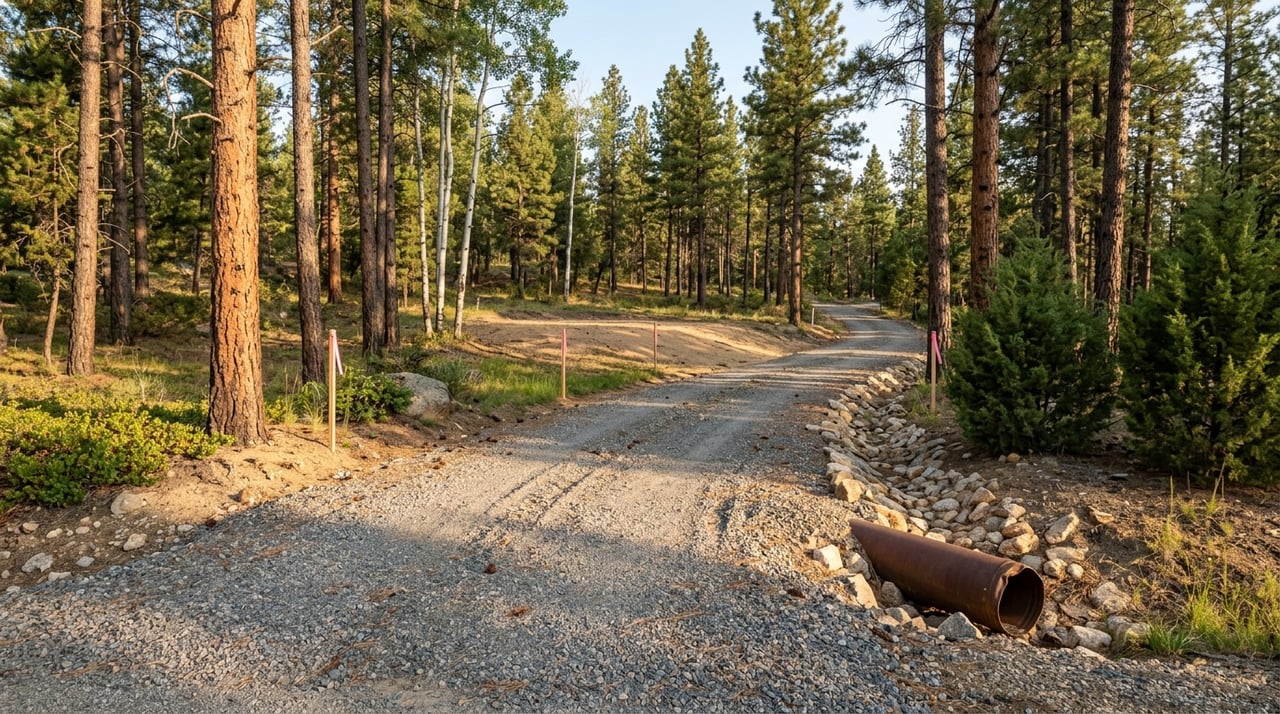
One of the first things to confirm is whether the parcel has permanent legal access. In Park County, if access comes by a private road, trail, easement, or driveway instead of county-owned right-of-way, the applicant must show a permanent legal right of access.
This matters because access is not just about whether you can physically reach the land today. For undeveloped property, Park County says access must reasonably meet county street, road, or driveway standards before a building permit is issued. A beautiful parcel can become a frustrating purchase if access is unclear or inadequate.
Many buyers assume nearby roads are maintained by the county, especially if they are commonly used. Park County says it maintains only roads on the county road system, not state highways, town streets, private roads, or residential or subdivision roads outside that system.
In more remote areas, road grading may happen only once a year, if at all. The county also notes that lower-priority snow removal is considered a courtesy rather than a requirement. If winter access matters to you, it is worth verifying road status early.
In Park County, driveway placement is part of the early planning process. Owners must identify the driveway location and apply for a driveway permit before constructing one.
You are also responsible for building and maintaining your own driveway and parking area. Since mountain terrain can create slope, drainage, and snow management challenges, driveway feasibility can affect both cost and usability.
Most homes and businesses in Park County rely on private wells for water. If you plan to build on vacant land in Shawnee, you will likely need to understand the well process and what the parcel can support.
Before drilling a new well, owners must obtain a well permit from the Colorado Division of Water Resources. The permit file can show allowable uses and may include construction and pump installation records, which can be useful when reviewing a property.
If a parcel already has a well, existing records may provide valuable details. Park County notes that well papers may be available for some properties, and the Colorado Division of Water Resources maintains permit search tools and map viewers.
Park County also recommends lab testing well water for bacteria, nitrates, radioactivity, and metals before household use. For buyers, this is a practical step that helps you understand not just whether water exists, but whether it is suitable for your planned use.
If the parcel does not connect to sewer service, you will likely need an on-site wastewater treatment system. In Park County, the local county health agency permits these systems for flows of 2,000 gallons per day or less.
Just as important, Park County says a septic permit must be obtained before applying for a building permit. That means septic feasibility is not a detail to sort out later. It is part of understanding whether the land works for your goals.
For vacant land, Park County points buyers toward a site evaluation through Environmental Health. The county says this evaluation should follow a survey and wetlands delineation.
The evaluation does not recommend the exact home or septic placement, but it helps establish the site conditions you need to understand early. Park County also offers a combined septic, driveway, and site evaluation permit through its CloudPermit portal, which can help organize the process.
Before you get attached to a parcel, check its zoning. Park County provides an interactive parcel and zoning map, and the county states that land use is governed by zoning ordinances, land use regulations, subdivision regulations, building codes, and state and county health regulations.
This step helps you match the property to your intended use. It can also save you from buying land that does not support the type of project you have in mind.
Some buyers assume they can rezone later if needed. Park County does allow rezoning, but it requires a formal process and is generally limited to zones present on adjacent properties.
For some rezonings, the county also requires disclosure of potential geologic hazards. That makes rezoning something to study carefully, not something to count on casually.
If you are buying land with a future split or investment plan in mind, be careful here. Park County’s FAQ states that an existing subdivision cannot be further subdivided, and land under 10 acres cannot be subdivided.
Land that is 10 acres or more and not already in a subdivision may possibly be subdivided after county review. The key word is possibly. If subdividing is part of your strategy, confirm the parcel’s status before you buy.
Some Shawnee properties may involve an added review layer because of historic designation. Park County identifies a Shawnee Historic District that includes 22 properties, and the county also maintains designated historic site information for the area.
If a parcel is listed or designated as historic, changes to the property come before the Historic Preservation Advisory Commission for review when a permit is requested. If you are considering a property in or near historic areas, it is wise to ask about that early.
Mountain land buyers sometimes picture a simple weekend setup while planning a future build. In Park County, the rules are more structured than many people expect.
The county’s FAQ says buildings used for sleeping must have electrical, plumbing, sanitation facilities, and running water. The county also says it does not allow primitive weekend or hunting cabins without those services.
Internet is another item that should be confirmed directly, not assumed. Park County’s current Bailey Broadband Initiative shows the county is still pursuing faster and more reliable broadband in the corridor.
That means availability can vary from one property to the next. If remote work, streaming, or connected home systems matter to you, verify service at the parcel level before you commit.
If you are thinking creatively about temporary or lower-cost housing, check the rules first. Park County’s FAQ says mobile homes are not allowed as a primary residence or accessory building in most zone districts except mobile home park districts.
That may affect how you budget and plan your long-term use of the property. The best approach is to line up your intended use with zoning and county requirements before closing.
In Park County, timing matters. The county says building permits are not issued until the applicant has complied with all other county requirements.
That means your process should be organized in the right order. Septic review, access, site conditions, and other approvals are not side issues. They are part of the path to a buildable property.
Park County also notes that, because of special wind and snow loads, plans must carry the stamp of a Colorado Registered Structural Engineer. Plumbing and electrical permits are handled through the State of Colorado.
For buyers, this is a reminder that building in Shawnee is not the same as building on a flat urban lot. Mountain conditions add design and permitting requirements that can affect both timeline and budget.
If you are thinking about buying land in Shawnee, these are the most important boxes to check before you move forward:
Buying land in Shawnee is less about finding a cheap price per acre and more about understanding the real-world limits and possibilities of a parcel. Access, septic, wells, snow load, driveway design, zoning, and historic review can all shape whether a property fits your goals.
That is where practical local knowledge can help. With decades of mountain-market experience and a former contractor and builder background, David Petersmith can help you look at Shawnee land with a more informed eye and a calmer process.
Stay up to date on the latest real estate trends.
Work with Choice Property Brokers LTD for expert guidance in the Colorado real estate market. Whether you're buying your first home, upgrading, or selling your property, our team provides local insight, strategic pricing, and personalized service to help you achieve the best results.
43 Mt Evans Blvd Pine, CO 80470