Shawnee's Historic District Still Works for a Living
Drive west from Bailey on US-285 and the hillside above the North Fork South Platte comes up fast: a cluster of century-old buildings tucked into the slope, a small cemetery visible through the trees, and a historical marker planted at the roadside by the people who live there. Most drivers slow down for the curve and keep going. The building that housed the original Shawnee Mercantile in 1900 is still standing, and it is still in use.
That distinction matters more than it sounds. A National Register listing tends to freeze a place in the reader's mind, as if the plaque itself is the point. In Shawnee, the plaque is the least interesting part of the story. The interesting part is that the same handful of buildings the Register recognized in 2010 are still doing what they did a century ago, just with different tenants, and the cemetery at the center of the district is not a static historic feature. It is an active restoration project, run by volunteers, with headstones still being pulled out of the ground.
Shawnee's historic core covers roughly two blocks on a hillside south of the highway. According to Park County's own inventory, the district holds 22 contributing properties and was designated a Park County Historic Landmark district in February 2008, two years before it earned its National Register listing in July 2010. The county's account of the site notes that Shawnee was platted in 1900 by John Price as a resort and summer-home community, promoted by the Denver, South Park & Pacific Railroad as a cool-weather escape from the Front Range.
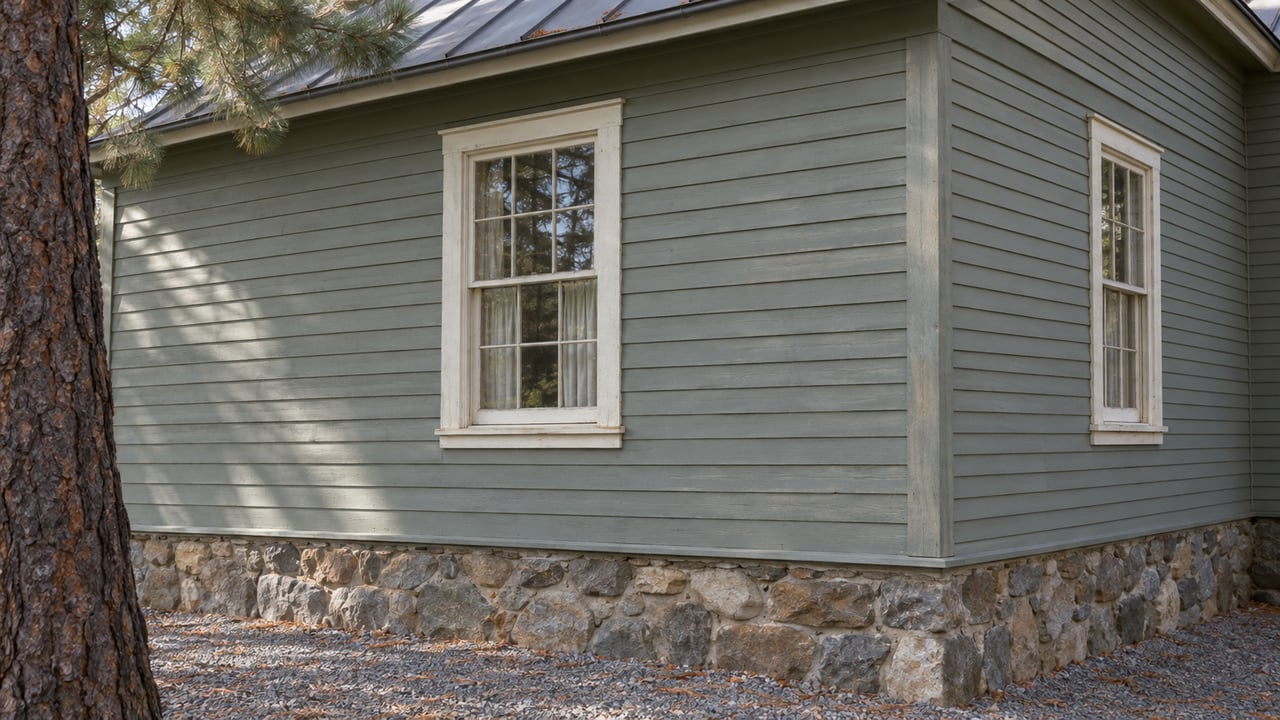
What that history skips past is what's still open inside those buildings today. The same 1900 structure that once operated as the Shawnee Store and Mercantile now houses the post office on one side and the Shawnee Tea Room on the other, sitting next door to each other in a building that never stopped serving foot traffic. A short walk away, Vincent and Carolyn Tolpo run a working studio out of the Shawnee Mountain Gallery, one of the district's original buildings, alongside Time Capsule Framing & Art in another. None of this is staged for visitors. It's a functioning row of small businesses that happen to sit inside a federally recognized historic district, which is a different thing than a preserved district that happens to have a gift shop.
The district's residential side tells the same story. A private home called "The Babbling," at 54545 Highway 285, earned its own Park County Historic Landmark designation in September 2012. According to the county's listing, it has been in continuous use as a summer home since the 1920s, which means the building has never been converted, mothballed, or turned into a museum piece. Someone has been spending summers there for a hundred years.
The most tangible evidence that Shawnee's history is still being actively handled, not just protected, sits in the Price-Tyler Cemetery at the heart of the district. Originally the Price family's private burial ground, it became the community cemetery in 1900. The earliest recorded burial was an infant, Perry James Price, in 1894. The most recent was Mary Ella Tyler, in 1965. A historical marker erected at the site in 2008, credited to the citizens of Shawnee themselves, records that settler families named Tyler, Bonnifield, and Price have been interred there, including a Civil War Union veteran, Private W.A. Bonnifield.
That marker also preserves a piece of local naming history that rarely survives this cleanly: the valley was known as "Slaght's Valley" before it was Shawnee, home to a stagecoach stop and a string of post offices under different names, Granite Vale, then Slaght's, then Fairville, before the site finally settled on the name Shawnee in 1900. The same marker notes that the local economy once ran on tourism, ranching, farming, and logging, with winter work supplied by the Maddox Ice Company until the railroad's departure in 1937 ended that arrangement. A community water utility, the Shawnee Water Consumers' Association, was organized in 1929 by three named residents, C.O. Cook, W.W. Garwood, and Roger D. Knight, and some version of that same water infrastructure history still underlies the district today.
But the cemetery's real news is more recent than any of that. According to the volunteer group Shawnee History, board member Rhonda Dusatko discovered multiple 19th-century headstones that had been buried over time and physically excavated them so they could be reset in preservation-grade mortar, with support from Steve Plutte of the Park County Cemetery Board. That is not a line in a National Register nomination. That is a specific person, doing specific physical work, on a specific set of graves, recently enough that the organization is still describing it as ongoing.
For a community with a total population of roughly 57 people, according to available demographic estimates, that kind of project draws on a meaningful share of the people who actually live there. There is no large parks department or paid preservation staff behind this work. It is a small nonprofit and a handful of named volunteers keeping 19th-century grave markers from disappearing back into the hillside.
The organization behind the cemetery work, the Shawnee Branch of the Park County Historical Society, meets on the third Tuesday of each month at the Shawnee Tea Room, next to the post office in the same 1900 building that once served as the town's general store. Their stated project list includes:
That May event has already come and gone for 2026, but the meeting cadence hasn't. A group that gathers monthly, in the same historic building where the post office still cancels stamps, is not treating its own history as something to visit once a year. It's treating it as a standing commitment, the kind that shows up on a calendar recurrence rather than a festival poster.
Shawnee History, the nonprofit that documents the district's origins, describes its own archive as a working record of deeds and homesteader documents tracing how the original land claims were split and sold, including to the railroad that eventually built a depot and lodge on the site. That archive isn't a static museum collection either. It's a resource the same small group of volunteers keeps adding to as they research the families named on the headstones they're resetting.
None of this changes what a driver sees from US-285: a marker, a hillside, a scatter of old buildings, a cemetery through the trees. What it changes is what's actually happening behind that view. The buildings are occupied. The cemetery is being worked on, not just fenced off. The historical society that maintains both meets on a fixed schedule inside the same 1900 structure the town was built around. A tiny unincorporated community with a NRHP listing usually reads as a place where history stopped. Shawnee's version of that history is still moving, headstone by headstone, third Tuesday by third Tuesday.
If you live along this stretch of the North Fork corridor and you've wondered what's actually happening past that historical marker, the answer is more hands-on than the plaque suggests. If questions ever come up about a specific property inside or near the historic district, from land history to how a designation like Park County's affects a home, Choice Property Brokers is glad to talk through what we know about this stretch of Shawnee.
Stay up to date on the latest real estate trends.
Work with Choice Property Brokers LTD for expert guidance in the Colorado real estate market. Whether you're buying your first home, upgrading, or selling your property, our team provides local insight, strategic pricing, and personalized service to help you achieve the best results.
43 Mt Evans Blvd Pine, CO 80470